
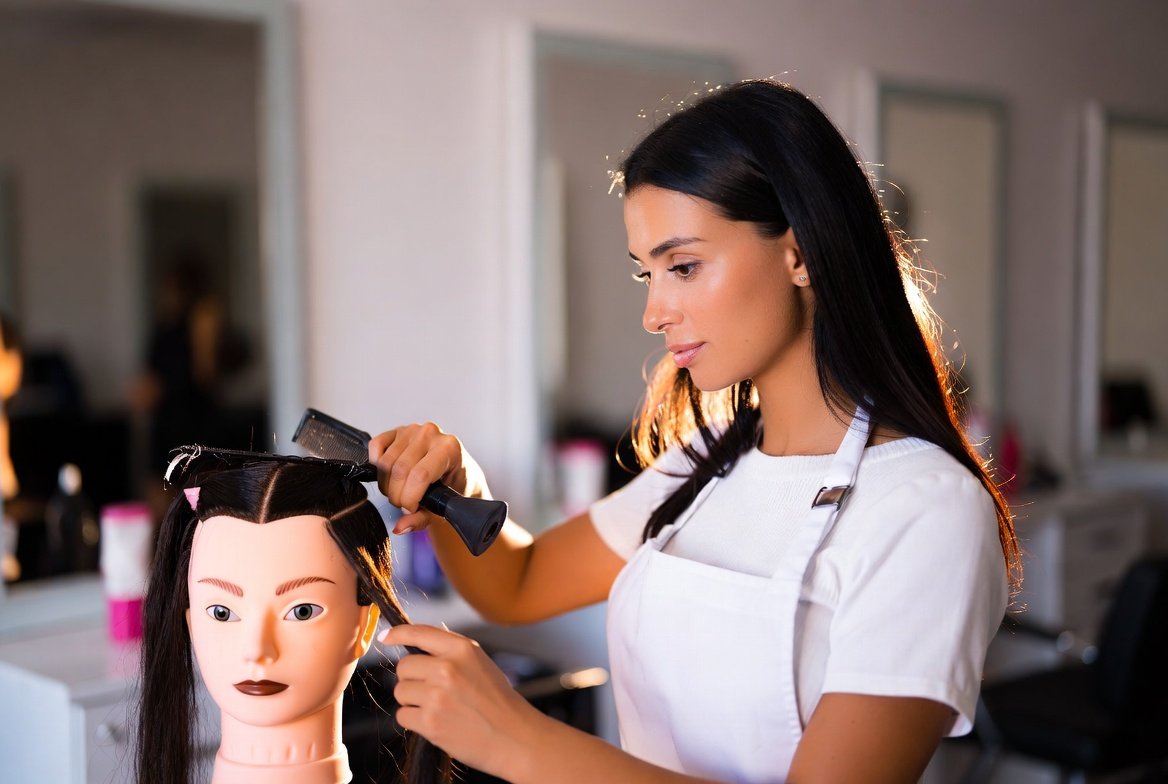
Complete Guide to Required Cosmetologist Hours in Texas
If you're searching for cosmetologist hours in Texas, you've come to the right place. Whether you're mid-program, just starting to research schools, or trying to understand the difference between training hours and renewal CE hours, this guide covers every number you need — straight from TDLR's current 2026 requirements.
Quick Answer
- What: Texas requires 1,000 school hours at a TDLR-licensed cosmetology program to qualify for a Cosmetology Operator license.
- Who: Anyone 17 or older pursuing a first-time Texas cosmetologist license.
- Key fact: School hours and CE renewal hours are completely separate — once licensed, you'll need 4 CE hours every 2 years to renew.
- Action: Complete your CE renewal hours online →
Key Facts at a Glance
| Detail | Information |
|---|---|
| Total school hours required | 1,000 hours at a TDLR-licensed cosmetology school |
| Alternative path | 500+ approved high school cosmetology hours + remaining hours at a licensed school (totaling 1,000) |
| Minimum age to enroll | 17 years old |
| Education requirement | High school diploma or GED |
| Written exam eligibility | After completing 900 of 1,000 hours |
| Practical exam eligibility | After completing all 1,000 hours and passing the written exam |
| Exam provider | PSI (third-party vendor contracted by TDLR) |
| Typical full-time completion | 7–10 months |
| Typical part-time completion | 12–15 months |
| CE hours required after licensing | 4 hours every 2 years (2 hours if licensed 15+ years) |
How Many Cosmetologist Hours Does Texas Require?
Texas requires 1,000 hours of instruction at a TDLR-licensed cosmetology school to qualify for a Cosmetology Operator license. This is the foundation of your path to working as a licensed cosmetologist in the state — and it's the number you'll see referenced throughout the TDLR application process.
Note that this figure was reduced from 1,500 hours in 2019 after House Bill 2847 was signed into law. So if you've seen the 1,500-hour figure elsewhere, that requirement is outdated. The current, correct number is 1,000 hours.
The Alternative Hour Path
There's also a second route to meeting the hour requirement. If you completed approved cosmetology courses in high school, you can apply up to 500 of those hours toward the 1,000-hour total — as long as your high school program was TDLR-approved. You'd then need to make up the remaining hours at a licensed cosmetology school. Either way, your combined total must reach 1,000 hours before you can apply for your license.
Most students enter a cosmetology school directly, without any prior hours to transfer. In that case, you simply complete the full 1,000 hours at your chosen school and follow the standard licensing steps from there.
How Your 1,000 Hours Are Structured
Your 1,000 hours aren't just general practice time — they cover a specific curriculum set by TDLR. The goal is to make sure every Texas cosmetologist graduates with solid skills across all the services they're licensed to perform.
Here's what the coursework typically includes. Your school's TDLR-approved curriculum determines the exact breakdown per subject, but the core areas are consistent across all licensed programs:
- Hair cutting, styling, and shaping techniques
- Hair coloring, bleaching, and lightening
- Permanent waving and chemical relaxing
- Scalp treatments and hair care
- Facial treatments and skincare basics
- Makeup application
- Hair removal (waxing, tweezing, depilatories)
- Manicuring and pedicuring
- Eyelash extensions
- Sanitation and infection control
- Texas laws and professional rules
Theory vs. Practical Hours
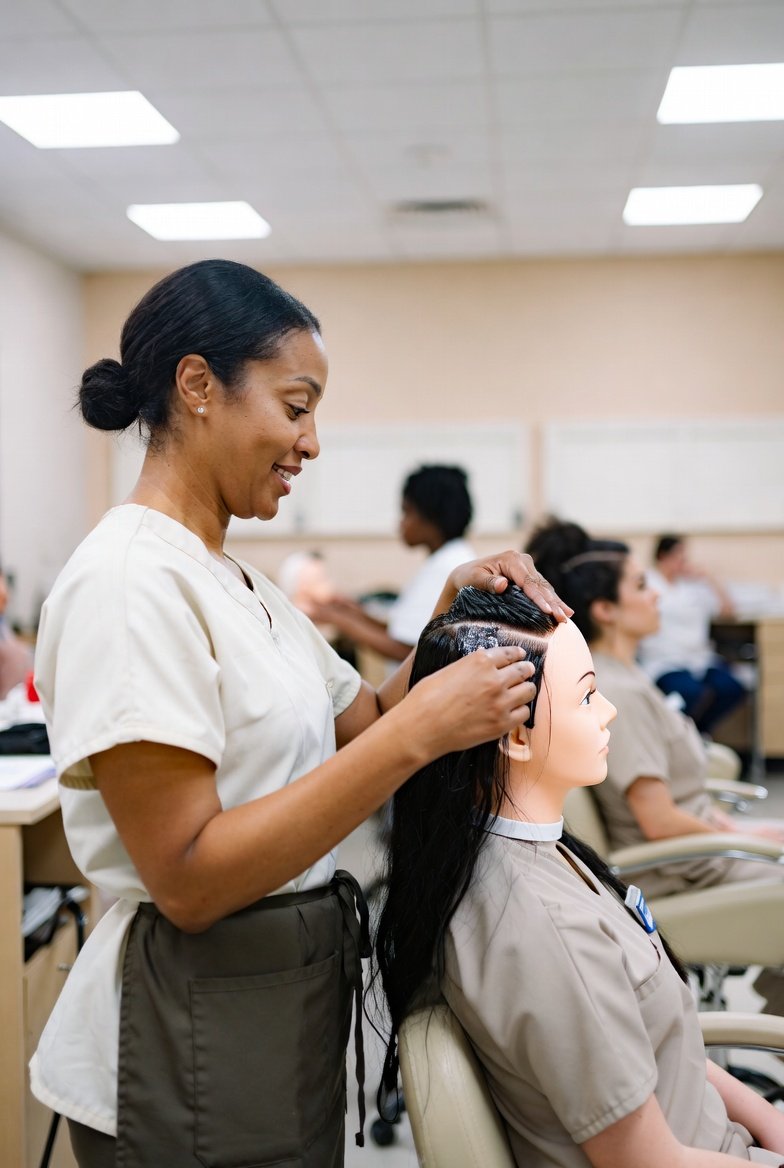
Your hours include both classroom instruction (theory) and hands-on practice (practical). Theory covers the science and rules behind each service — things like how chemical processes work, sanitation requirements, and state regulations. Practical hours put those lessons to work on real clients or mannequin heads under instructor supervision. Both components count toward your total.
Additionally, the TDLR cosmetology CE requirements you'll face at renewal also emphasize sanitation and safety — so the foundation you build during school carries directly into your professional obligations once licensed.

Student Permit and Hour Tracking
When you enroll in a TDLR-licensed cosmetology school, you're issued a student permit. This permit is your official record while you're in training — it links your identity to your accumulated hours in the TDLR system.
Your school is responsible for reporting your hours directly to TDLR throughout your program. You don't submit hours yourself — your school does that on your behalf. However, you can verify your logged hours at any time using the TDLR Student Hours Data Search tool, available at tdlr.texas.gov. Just enter your student permit number to see what's on file.
What to Do If Hours Are Missing
If you check your hours and the total looks lower than it should, start with your school. Reporting delays do happen, and most schools can resolve the issue quickly. If your school confirms the hours were submitted but the TDLR system still doesn't reflect them, contact TDLR directly at (800) 803-9202 or (512) 463-6599.
Keeping an eye on your hours throughout your program — not just at the end — helps you avoid surprises close to exam time. It's a simple check that can save you weeks of delay.
Exams, Licensing, and What Comes Next
Once your hours are accumulating, two important milestones happen in a specific order. Understanding the sequence helps you plan your schedule so there's no gap between finishing school and getting licensed.
Fees to Budget For
The total fees for exams and licensing add up to roughly $181. That covers the written exam, the practical exam, and the TDLR application fee. These are separate from your school tuition, which typically runs between $10,000 and $20,000 depending on the program. For a full breakdown of the licensing process, see the guide to Texas cosmetology license requirements.
School Hours vs. CE Hours: Know the Difference
One of the most common points of confusion for Texas cosmetologists is understanding how school training hours relate to continuing education (CE) hours. The short answer: they're completely separate, and they serve different purposes.
School Hours — Before You're Licensed
Your 1,000 cosmetology school hours are pre-licensure. You complete them before you receive your license for the first time. These hours are required once — at the start of your career — and they don't repeat. Once you're licensed, you never need to accumulate school hours again.
CE Hours — After You're Licensed
Once you hold a Texas cosmetologist license, you enter the renewal cycle. Every two years, TDLR requires you to complete continuing education before you can renew. Most licensees need 4 CE hours per cycle. However, if you've held your Texas license for 15 or more years, that drops to just 2 hours. Your CE must come from a TDLR-approved provider, and it must cover specific required topics — including 1 hour of sanitation and 1 hour of human trafficking prevention awareness.
For a full breakdown of what those CE hours must cover and how the online course works, the guide to Texas cosmetology continuing education covers every detail. Similarly, if you hold multiple TDLR licenses — say, a cosmetologist and manicurist license — CE completed for one license satisfies all others you hold simultaneously, which is a helpful detail many licensees don't know about until renewal time. You can read more about how this applies to different license types in the TDLR cosmetology CE requirements overview.
The Practical Takeaway
If you're currently in school, your only focus right now is hitting 1,000 hours and passing your exams. CE is a future obligation — something you'll handle every two years once your license is active. Both requirements matter, but they operate on completely different timelines and through different systems.
Frequently Asked Questions
How many hours do you need for a cosmetology license in Texas?
You need 1,000 hours of instruction at a TDLR-licensed cosmetology school to qualify for a Texas Cosmetology Operator license. An alternative path allows 1,000 hours total if you combine at least 500 hours from approved high school cosmetology courses with the remaining hours at a licensed school.
Can I take the written exam before finishing all 1,000 hours?
Yes. After you complete 900 of your 1,000 required hours, your school notifies TDLR of your eligibility. TDLR then confirms with PSI, the third-party exam vendor, who sends you scheduling instructions for the written exam. You must finish all 1,000 hours and pass the written exam before you can take the practical exam.
Who tracks my school hours during training?
Your TDLR-licensed school tracks and reports your hours directly to TDLR throughout your program. You receive a student permit when you enroll, and your hours accumulate under that permit number. You can verify your logged hours any time using the TDLR Student Hours Data Search tool at tdlr.texas.gov.
What subjects count toward my 1,000 cosmetology school hours?
The 1,000-hour curriculum covers hair cutting, styling, coloring, and chemical services; skincare and facial treatments; nail care; hair removal; eyelash extensions; makeup application; sanitation and infection control; and Texas laws and rules. Your school's TDLR-approved curriculum determines the exact hour breakdown per subject.
Are school training hours the same as CE hours required for renewal?
No — they are completely different. School hours (1,000 hours) are the pre-licensure training you complete before getting your license for the first time. CE hours (4 hours every two years, or 2 hours if licensed 15+ years) are the continuing education you complete after you're licensed, to satisfy TDLR's renewal requirement. The two are separate and do not substitute for each other.
How long does it take to complete 1,000 cosmetology school hours in Texas?
Most full-time programs take 7 to 10 months to complete. Part-time schedules typically run 12 to 15 months. The timeline depends on your school's daily schedule and whether you attend full-time or part-time.
Does Texas accept cosmetology hours completed in another state?
Texas offers licensure by equivalence for cosmetologists who hold a current, active license in a state with substantially equivalent requirements. You'll need a certified transcript of your training hours. Texas does not accept hours gained through apprenticeship programs. Check the TDLR website for the current list of states with equivalent standards.
What happens after I finish my school hours and pass both exams?
After passing both the written and practical exams, you apply for your Cosmetology Operator license through the TDLR online portal and pay the $50 application fee. Once TDLR approves your application, you're licensed and can legally perform cosmetology services in Texas. Your license will then need to be renewed every two years, which requires completing 4 hours of TDLR-approved continuing education.
Sources: TDLR — Apply for a Cosmetology Operator License · TDLR — Continuing Education Requirements · TDLR — Student Hours Data Search