
Avoid These Critical Mistakes on Your Texas Cosmetology Exam
If you're searching for texas cosmetology exam practice resources, you're in exactly the right place. The PSI licensing exam is the final hurdle between you and your Texas cosmetology operator license — and knowing what's actually on the test, how to register, and what the passing score requires can save you weeks of wasted studying. This guide breaks down every section of the written exam, walks you through the PSI registration process step by step, and tells you exactly what to do if things don't go your way on test day.
Quick Answer
- What: The Texas cosmetology written exam is a 100-question multiple-choice test administered by PSI — you need a 70% to pass.
- Who: Any student who has completed at least 900 of the required 1,000 school hours and received TDLR approval.
- Key fact: Hair and scalp topics make up ~40% of the written exam; infection control makes up ~28% — those two areas alone cover nearly 70% of your score.
- Action: Already licensed? Complete your CE renewal course now →
Key Facts at a Glance
| Detail | Information |
|---|---|
| Exam Administrator | PSI (third-party vendor contracted by TDLR) |
| Written Exam Format | 100 scored multiple-choice questions, 90 minutes |
| Passing Score | 70% (70 of 100 questions correct) |
| Eligibility to Schedule | After 900 of 1,000 required school hours + TDLR approval |
| Exam Order | Must pass written before scheduling the practical exam |
| Retakes | Unlimited attempts within your 5-year eligibility window |
| Language Options | English, Spanish, Vietnamese (no extra cost) |
| Largest Topic Area | Hair & Scalp (~40% of written questions) |
| Second Largest Area | Infection Control & Sanitation (~28% of written questions) |
| PSI Contact | (833) 333-4741 · psiexams.com |
What the Texas Cosmetology Written Exam Covers
The PSI written exam for Texas cosmetology operator candidates tests your knowledge across five main topic areas. Understanding the weight of each area before you begin studying is one of the most effective cosmetology exam practice strategies you can use — because it tells you where to spend your time.
Hair and Scalp Services (~40%)
This is the single largest section of the written exam, covering roughly 40% of your total score. Expect questions on hair structure and growth cycles, chemical services (relaxers, perms, color), cutting techniques, scalp analysis, and the science behind how hair products work. Because this section is worth so much, even a few weak spots here can hurt your overall score significantly.
Infection Control and Sanitation (~28%)
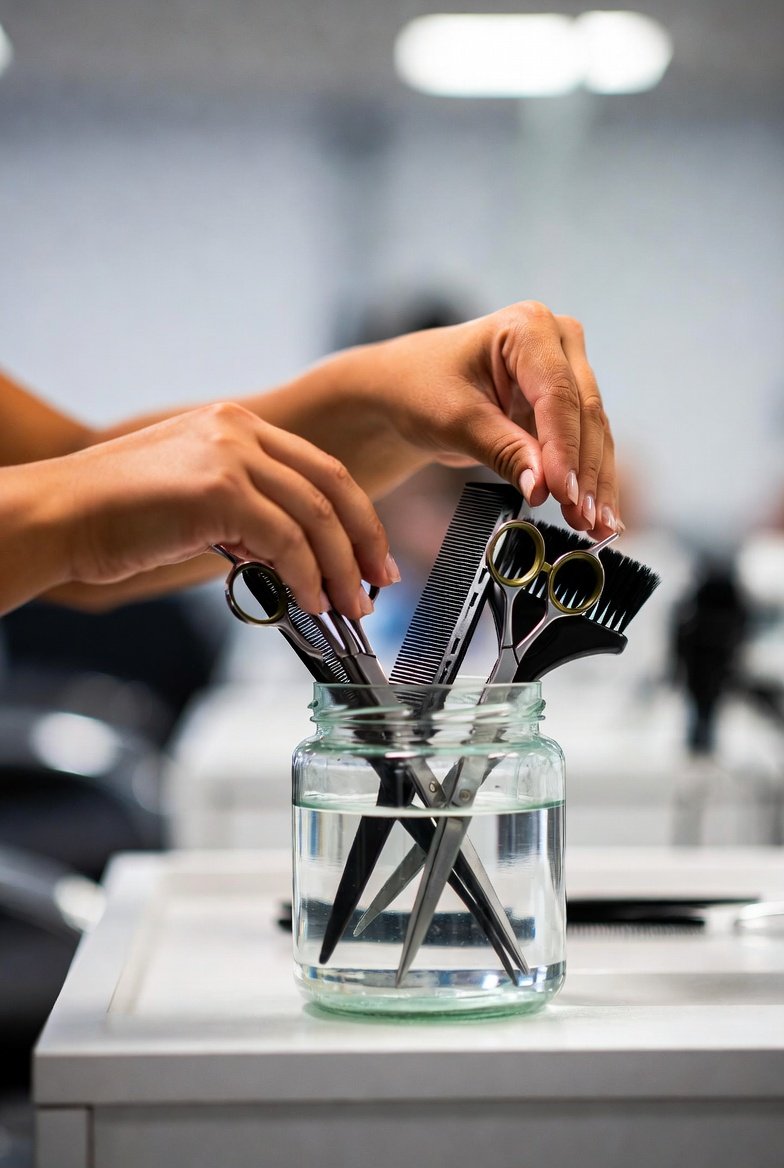
Together with hair and scalp, infection control makes up nearly 70% of the written test — so these two areas deserve most of your prep time. Questions cover disinfection versus sterilization, EPA-registered product use, blood exposure protocols, and the proper handling of tools between clients. Sanitation errors on the practical exam can also result in immediate failure, so strong command of this topic pays off on both parts of the exam.
For context on why sanitation stays central even after licensing, Texas cosmetology continuing education courses also require one mandatory hour of sanitation training at every renewal cycle — it's a core competency throughout your career.
Texas State Laws and Rules (~12–15%)
This section tests your knowledge of TDLR regulations — license requirements, establishment rules, scope of practice, and consumer protection laws. Don't underestimate it. Many students skip Texas law topics because they feel dry, but these questions offer some of the most straightforward points you can earn on the exam.
Skin Care Theory (~10%)
Expect foundational questions on skin anatomy, basic facial treatments, and product ingredients. While this section is smaller, it's still worth reviewing carefully — especially if you plan to add an esthetician license later in your career.
Nail Care (~8–10%)
Nail questions focus on nail anatomy, product chemistry (acrylics, gels), basic manicure procedures, and sanitation specific to nail services. Additionally, the PSI Candidate Information Bulletin is the official blueprint for exam content — always use it as your primary reference, because the exam is built directly from it.
How to Register for the PSI Exam Through TDLR
Registration follows a specific sequence. Missing a step — or doing them out of order — can delay your exam date by weeks. Here's exactly how the process works in 2026.
Written exam locations include Abilene, Amarillo, Arlington, Austin, Corpus Christi, Dallas, El Paso, Fort Worth, Harlingen, Houston, Lubbock, and several other Texas cities. Choose the center closest to you when you schedule — availability varies by location. Because Texas requires you to pass the written exam before scheduling the practical, your written exam date effectively sets your entire licensing timeline.
What to Expect on the Practical Exam
The practical exam tests your ability to perform cosmetology services on a mannequin under timed conditions, with a live examiner evaluating every step. You must score 70% or higher — meaning you need to complete 70% or more of the required actions in the correct sequence to pass.
What You Must Bring
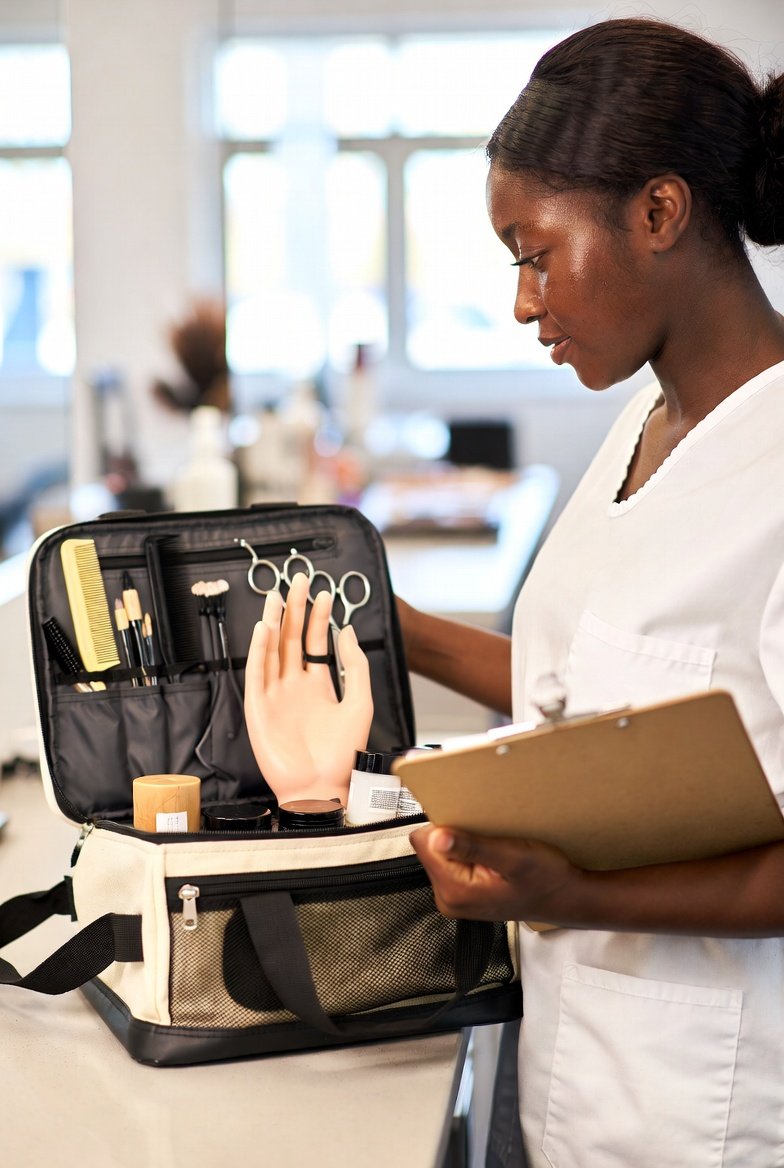
The PSI guide specifies a complete kit list. Missing even one required item means you won't be admitted. Common required supplies include:
- Combs, brushes, cutting shears, and hair clips
- A mannequin head with full hair and a mannequin hand with nails
- Towels, drapes, gloves, spray bottles, tint bowl, and applicator brushes
- Nail supplies including files, tips, and odorless monomer
- All products clearly labeled in English — no aerosols or unsafe chemicals
What Examiners Watch Most Closely
Sanitation is the top priority throughout the practical. A serious safety or infection-control error — like skipping hand sanitation before a service — can result in automatic failure regardless of your technique score. Before each service, mentally walk through your sanitation steps: sanitize hands, drape the mannequin correctly, set up your station. Think of every safety step as a non-negotiable checkpoint, not just good practice.
Beyond sanitation, examiners evaluate whether you follow the correct sequence for each service. Creativity and styling flair don't earn extra points here — accuracy, safety, and protocol compliance are what move your score. Students who've already built strong habits through their school hours tend to find the practical more straightforward than the written portion, so practice every service in its required order before exam day.
Proven Study Strategies That Actually Work
Effective cosmetology exam practice isn't about reading everything — it's about studying the right material in the right order. These strategies will help you use your prep time efficiently so you walk into PSI ready and confident.
Start With the PSI Candidate Bulletin, Not a Study Book
Most students reach for a textbook first. However, the smartest move is to download the PSI Candidate Information Bulletin and read it completely before touching any other study material. The bulletin tells you the exact topic outline, the number of questions per area, and the time limit — essentially the official blueprint for what's on your test. Build your study plan around it, not around a generic cosmetology textbook.
Study High-Weight Topics First
Hair and scalp (40%) and infection control (28%) together account for nearly 70% of your written score. If you only have two weeks to study, spend the first week entirely on these two areas. Move to state laws, skin theory, and nail care once you're consistently scoring well on practice questions in those top categories.
Use Mixed Practice Tests, Not Topic-by-Topic Drills
The actual exam doesn't group questions by topic — it cycles through hair, sanitation, skin, nails, and state law in no particular order. Training yourself to switch between topics quickly is an underrated skill. After your first week of focused topic review, shift to mixed-question practice sets so your brain gets comfortable with the mental context-switching the real exam requires.
Review Every Wrong Answer Fully
Don't just mark wrong answers and move on. For each missed question, identify the concept behind it, correct your understanding, and then look for related questions you might have also gotten wrong. Most score improvement comes from closing specific knowledge gaps, not from repetitive review of material you already know.
Take at Least Two Timed Practice Tests Before Exam Day
Ninety minutes for 100 questions means roughly 54 seconds per question. That pace is tighter than most students expect. Completing two or three full timed runs before your exam date builds the time awareness and mental endurance you need so you don't run out of clock near the end of the test.
Already have your Texas cosmetology license? Keep it active with your TDLR-required continuing education.
Complete Your CE Course Online →What to Do If You Don't Pass
Failing the written or practical exam is frustrating — but it's not the end of the road. Texas gives you broad flexibility to retake both portions, and PSI provides diagnostic feedback that makes your retake more targeted than your first attempt.
After a Failed Written Exam
If your score falls below 70%, PSI will issue a diagnostic report breaking down your performance by topic area. This report is genuinely useful — it tells you exactly which sections pulled your score down so you can focus your cosmetology exam practice on those specific gaps. From there, log back into your PSI account, pay the retake fee, and schedule a new test date. There's no mandatory waiting period between attempts, so you can retest as soon as a slot opens.
Your eligibility window runs five years from the date TDLR approved your application. Within that window, you can attempt both the written and practical exams an unlimited number of times. However, if your application expires without you passing, you'll need to reapply through TDLR and pay the application fee again — so don't let too much time pass between attempts.
After a Failed Practical Exam
Because you already hold a passing written score, you only need to retake the practical portion. PSI scores the practical using a pass/fail checklist, and while there's no detailed diagnostic report as there is for the written exam, your examiner will complete their scoring notes during the session. Focus your additional practice on sanitation sequencing and service order — those are the two most common reasons students don't pass the practical on their first try. Schedule your retake through PSI after paying the required fee.
Once you earn your license through TDLR, the next milestone on your timeline becomes continuing education at renewal. Understanding the TDLR cosmetology CE requirements early means you won't be caught off guard when your first renewal cycle arrives. For a broader look at the renewal process across all license types, the TDLR cosmetology license renewal guide covers every fee tier, portal step, and 2026 update you'll need.
Frequently Asked Questions
When can I schedule my Texas cosmetology written exam?
You can schedule your PSI written exam after completing 900 of your required 1,000 school hours and receiving TDLR approval. You don't have to wait until you finish all 1,000 hours to sit for the written portion.
How many questions are on the Texas cosmetology written exam?
The Texas cosmetology written exam through PSI contains 100 scored multiple-choice questions. You'll have 90 minutes to complete the test at a PSI testing center.
What score do I need to pass the Texas cosmetology exam?
You must score 70% or higher on both the written and practical exams to pass. That means correctly answering at least 70 of the 100 scored questions on the written portion.
What topics are on the Texas cosmetology written exam?
The written exam focuses heavily on hair and scalp services (approximately 40% of questions) and infection control and sanitation (approximately 28%). The remaining questions cover skin care theory, nail care, and Texas state laws and rules.
What happens if I fail the Texas cosmetology written exam?
If you score below 70%, PSI will provide a diagnostic report showing your weak areas by topic. You can retake the written exam an unlimited number of times within your 5-year eligibility window, but you must pay the exam fee for each attempt and schedule a new appointment through PSI.
Do I have to pass the written exam before the practical?
Yes. TDLR requires you to pass the written examination before you can pay for and schedule the practical (hands-on) exam. The two exams must be completed in that order.
Is the Texas cosmetology exam available in Spanish?
Yes. PSI offers the Texas cosmetology written exam in English, Spanish, and Vietnamese at no additional cost. You must indicate your language preference when you schedule your exam appointment.
Sources: TDLR Barbering & Cosmetology Exam Information · PSI — Texas TDLR Exam Portal · PSI Cosmetology Operator License Examination Candidate Information Bulletin