
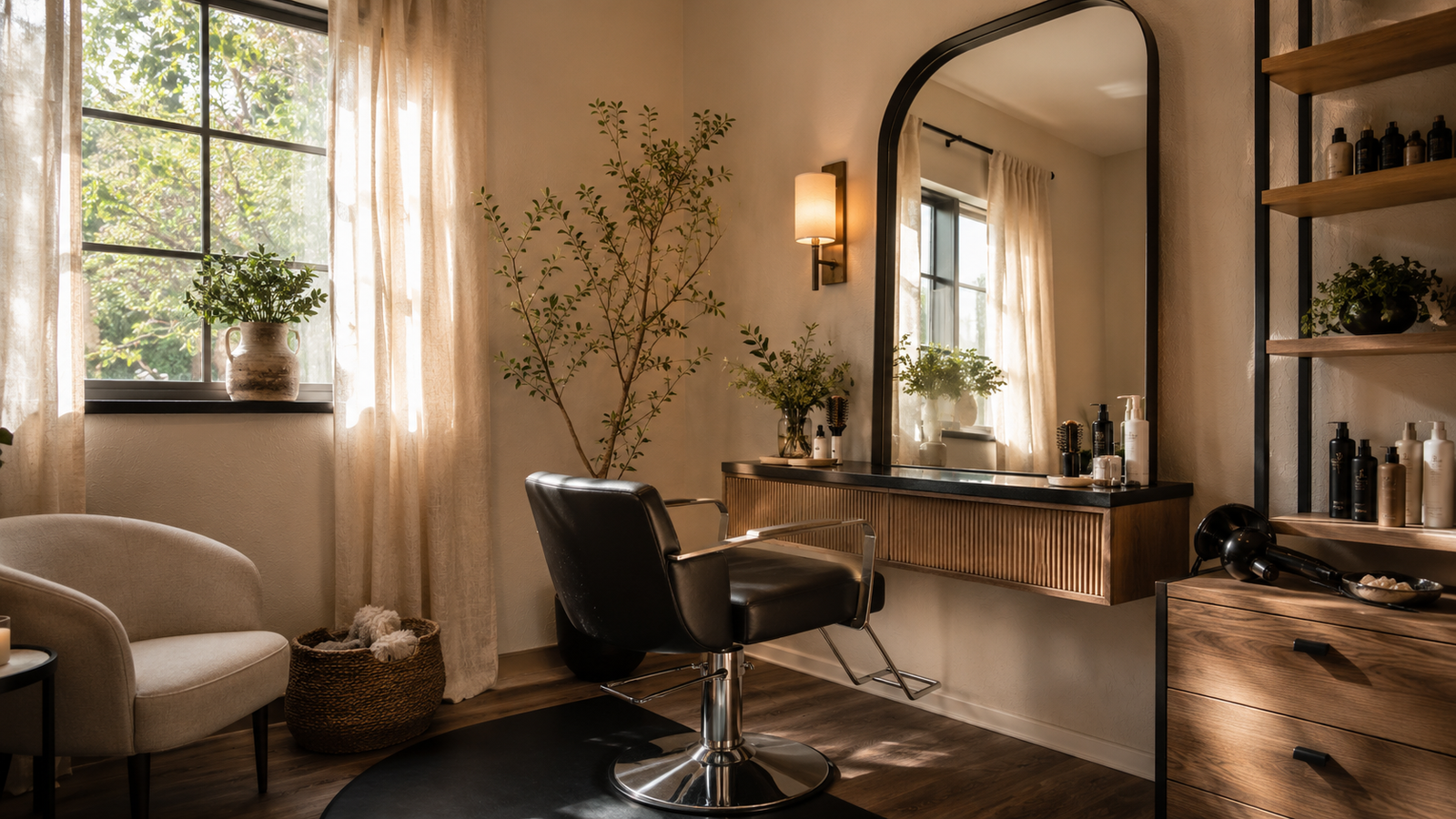
mini establishment license
Mini Establishment License: Texas Requirements Explained
A mini establishment license covers an enclosed suite inside another salon that runs as its own business. Here is how TDLR treats it, and how it differs from booth rental.
Quick Answer
- A mini establishment license covers an enclosed room or suite inside another salon that operates as its own business.
- It requires its own TDLR establishment license, separate from the host salon's license.
- This differs from booth rental, where you lease a station inside an existing salon with no separate establishment license needed.
- TDLR eliminated the standalone booth rental license in 2024 — an active individual license is all a booth renter needs.
- Salon owners hosting either arrangement must maintain a list of everyone working under their roof.

What Is a Mini Establishment License
A mini establishment is a closed-off room or suite inside another salon. It runs as its own business. Because of that, TDLR makes it hold its own establishment license, even though it sits inside a bigger salon's walls.
This is not the same as renting a spot on an open salon floor. A closed suite with its own business name needs its own license under TDLR rules.
Mini Establishment vs. Booth Rental
TDLR dropped the separate booth rental license in 2024. A booth renter today just needs an active individual license to rent a station in a licensed salon.
A mini-establishment is different. It runs as its own business, not just a rented chair.
| Booth Rental | Mini-Establishment | |
|---|---|---|
| Structure | Station inside existing salon | Closed suite, own business |
| License needed | Active individual license only | Separate TDLR establishment license |
| Host salon requirement | Must hold establishment license | Not applicable — runs on its own |
Just renting a chair? You likely fall under booth rental. Building a closed, branded suite? You likely need your own establishment license.
TDLR Establishment License Requirements
Any business with an establishment license must keep a current list of everyone who works there. Names and license numbers, both required. This is true whether you host booth renters, a mini-establishment, or both.
A mini-establishment owner applies for a TDLR establishment license the same way any salon would. The suite counts as its own business. It is not part of the host salon.
If you host booth renters or a mini-establishment, keep a current list of every licensed professional working under your roof, including license numbers.
Renewing Once You Are Set Up
Setting up your mini establishment license does not change your own renewal. Your individual license still runs on the same 2-year cycle as any other cosmetology license.
You still owe $50 on time. You still need CE hours each cycle: 4 hours if licensed under 15 years, or 2 hours at 15 years or more. Your establishment license is a separate track, but your personal license keeps its own rules.
Starting May 1, 2026, TDLR also asks for proof of lawful U.S. presence on every application, including establishment licenses. Most U.S. citizens meet this automatically through the SSN on file.
Your individual license and your establishment license renew on their own terms. Setting up a mini-establishment does not change your personal license's $50 fee or CE requirement.
Setting Up Your Mini Establishment
A mini-establishment takes extra setup steps. Do these first. Apply for your license online at TDLR.
- Confirm your suite is closed off and runs as its own business, not just an open station
- Apply for your own TDLR establishment license
- Keep your individual license active and displayed
- Keep your own records of anyone working under your license
- Tell the host salon owner — they may need to update their own renter records
Frequently Asked Questions
What is a mini establishment license in Texas?
It covers an enclosed room or suite inside another salon that operates as its own independent business. TDLR requires it to hold a separate establishment license, distinct from the host salon's license.
Is a mini-establishment the same as booth rental?
No. Booth rental is renting an open station inside an existing salon with no separate establishment license needed. A mini-establishment is an enclosed suite operating as its own business, which does need its own establishment license.
Do I still need a booth rental license in Texas?
No. TDLR eliminated the separate booth rental license in 2024. An active individual cosmetology, esthetician, or manicurist license is all that is required to rent a station.
Does my mini-establishment need to display my individual license too?
Yes. An establishment license does not replace your individual license display requirement. Both must be posted and visible at your workstation.
Who applies for the establishment license — me or the host salon owner?
If you are running a mini-establishment, you apply for your own TDLR establishment license, since it is treated as an independent business rather than an extension of the host salon.
Does opening a mini-establishment change how my individual license renews?
No. Your individual license keeps its own 2-year renewal cycle, $50 fee, and CE requirement, completely separate from your establishment license.
Do I need to prove lawful presence to get a mini-establishment license?
Yes, starting May 1, 2026. TDLR requires proof of lawful U.S. presence on every license application, including establishment licenses. Most U.S. citizens satisfy this automatically through the SSN on file.